Hard Money And Private Lending


Get Leads with Profile Lead Capture

Set up your account to get leads and learn to do a profile lead capture. Even if you have registered, your account may not be set up to receive leads. Follow these steps to ensure that all leads that match your criteria can be sent to you:

Get Leads  with Profile Lead Capture

How to Choose a Hard Money Lender

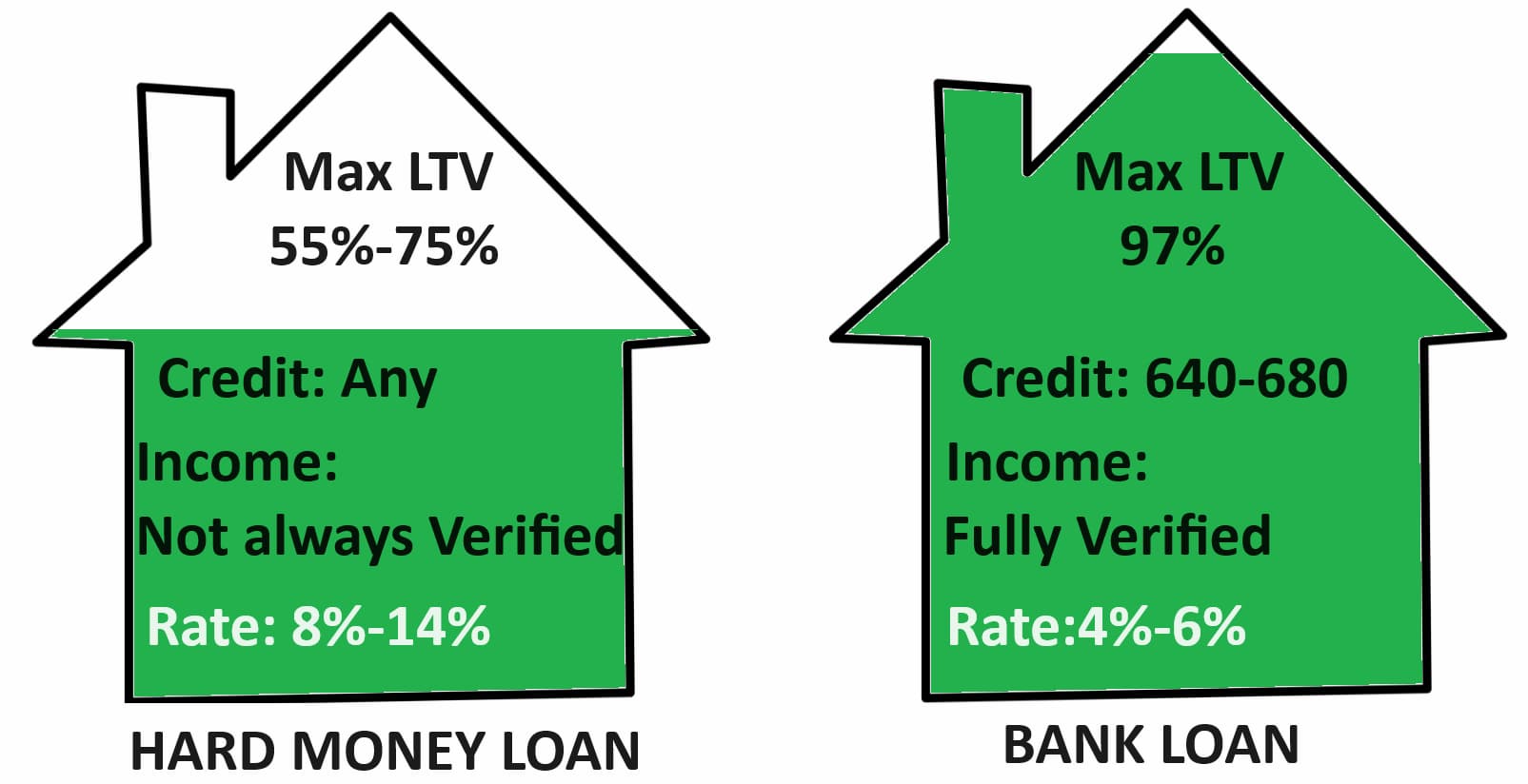
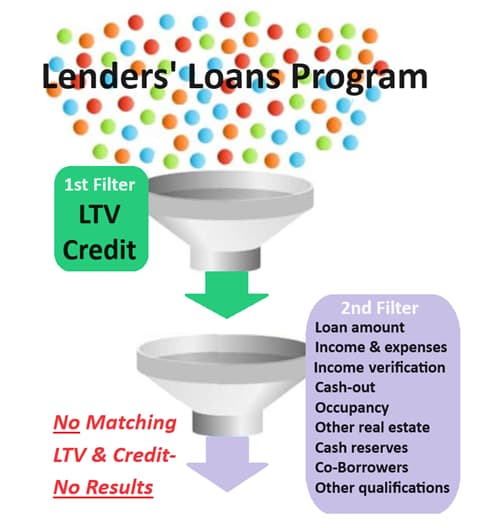
Hard money lending –a fractionalized market. There are thousands of hard money lenders in the US. The common denominator of all hard money loans is that the Loans are based on property equity. This article explains the different types of hard money lenders and how to select the right one for your specific needs. Since there could be different opinions about the property value among private investors, and since lenders have different maximum LTV they are willing to lend on, the maximum loan amount each lender is willing to lend will be different. Although equity is the prime factor in approving a hard money loan, other factors such as additional real estate, credit, experience, and income can influence lenders to lend above 65%. Hard money lending –a fractionalized market

How to Choose a Hard Money Lender

25 Best Direct Hard Money Lenders in California

Every real estate investor wants to cut out the middleman to save time and money. While going straight to a 'Direct Lender' is the holy grail for many, skipping the broker isn't always the smartest move. Here’s why direct hard money lenders are in high demand, when a broker might actually save your deal, and how to instantly shop both in California

25 Best Direct Hard Money Lenders in California

COMPARING LOANS SIDE BY SIDE: WHY AND HOW

This document explains the significant differences among various real estate loan providers—including banks, credit unions, Fannie Mae, Freddie Mac, FHA, private hard money lenders, insurance companies, and CMBS lenders—highlighting the importance of shopping around, comparing loan estimates, understanding lender-specific criteria and overlays, and considering factors such as rates, terms, fees, underwriting standards, and lender types to find the best loan fit for borrowers' specific needs.

COMPARING LOANS SIDE BY SIDE: WHY AND HOW

How to Negotiate a Hard Money Loan

Loan Negotiation is not an option- it is an important step in getting a loan A borrower can and should negotiate with a bank, a broker, and a private money lender on loan terms and fees before closing. The optimal time to negotiate is during the initial application and pre-approval phase, especially after receiving a Loan Estimate, a loan proposal, or an LOI.

How to Negotiate a Hard Money Loan

DSCR LOAN COMPLETE GUIDE 2026

Welcome to the world of DSCR Loans. By the end of this article, you’re going to run to your family and say, "I finally get it! I can actually buy real estate now!

DSCR  LOAN COMPLETE GUIDE 2026

16 Best Hard Money Wholesale Lenders

Brokers: How much time are you wasting trying to find the right hard money wholesale lender for a tough client scenario? ⏱️ Chasing down lenders, managing scattered emails, and comparing complicated LOIs takes you away from what actually matters: closing the deal and serving your client. We just published a fully transparent guide breaking down the 16 BEST Direct Hard Money Lenders in the industry—and we even included their direct phone numbers and emails. 📞✉️ You can contact them one by one, or you can see how Lendersa® lets you reach all 16 (plus hundreds more) in about 5 minutes.

16 Best Hard Money Wholesale Lenders

The Definitive Guide to Hard Money LTV: How Property Valuation Dictates Your Real Estate Loan

Wondering how much equity you need? Compare hard money LTV requirements by credit score and learn how different property types alter your loan amount.

The Definitive Guide to Hard Money LTV: How Property Valuation Dictates Your Real Estate Loan

Hard Money Loan Calculator: Rates & Fees

Securing a hard money loan requires understanding a completely different framework than traditional bank financing. Rather than focusing primarily on personal income, private lenders prioritize the asset. This comprehensive guide breaks down the "5 Master Factors" determining your hard money rates and origination fees. It begins with Property Factors, highlighting how Loan-to-Value (LTV) reigns supreme, alongside property type, condition, and income. Next, it explores Borrower Factors, noting that while credit matters, an investor's track record and exit strategy carry more weight. The guide also details essential Loan Features like duration, prepayment penalties, and funding speed, before examining the motivations behind The Lender ecosystem (local vs. national, brokers vs. direct lenders). Finally, it addresses macro Market Influences, such as local real estate trends and economic shifts. Ultimately, while baseline national averages provide a starting point, completing a customized loan scenario is th


Hard Money Loan Calculator: Rates & Fees

20 Best Commercial Hard Money Lenders

When seeking capital for your next real estate project, finding the right partner is crucial. Below is a curated directory of the 20 best commercial hard money lenders to help you start your search. **** At Lendersa, we aren't competing with lenders; we simply strive to give you the best service and full transparency. Because of this, we have provided the direct phone numbers and emails for the 20 best commercial hard money lenders in the industry right here in this post. *** You have a choice. You can spend the next several days doing this the "hard way"—preparing your scenario and manually emailing it to each of these lenders one by one. OR, you can do it the "smart way" using Lendersa® for free. Our portal can save you hours of work and boost your chances of securing a better loan by 95%.


20 Best Commercial Hard Money Lenders

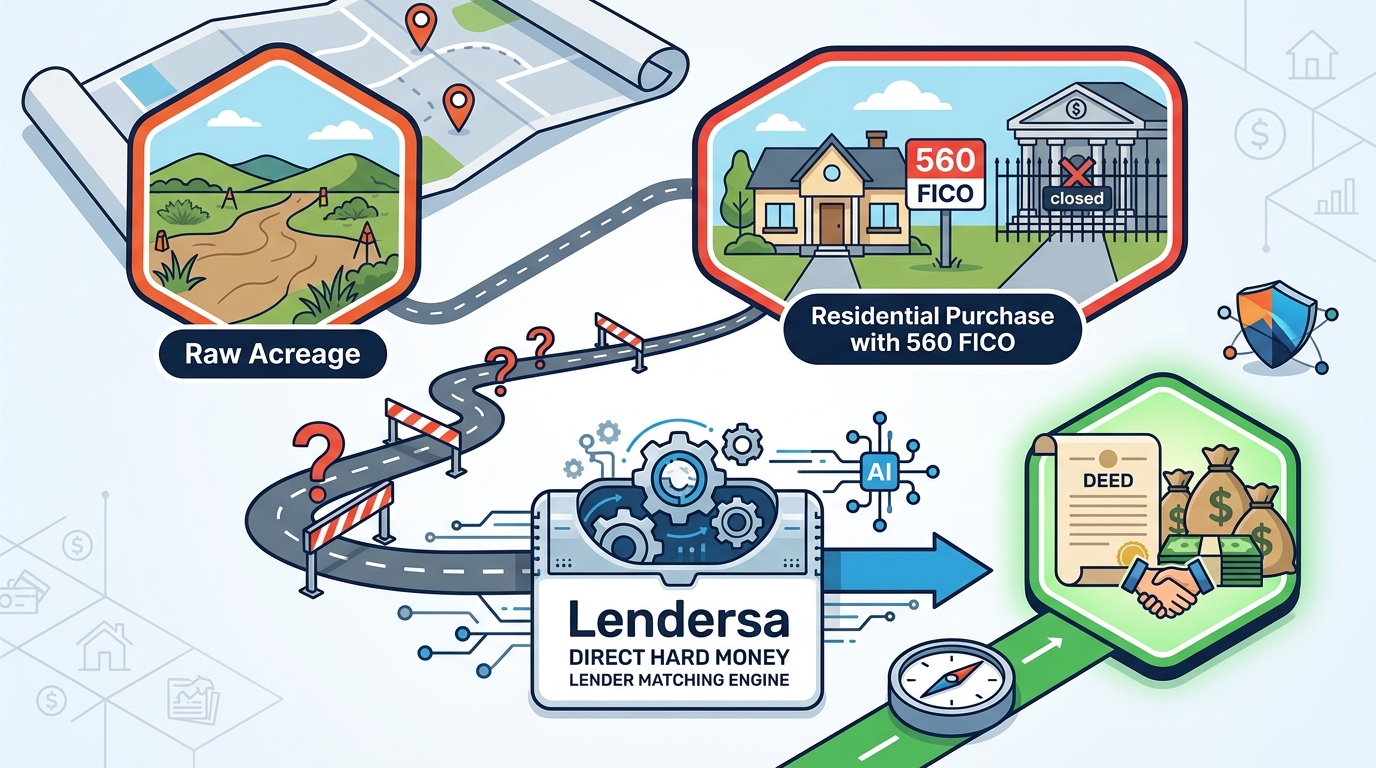
How AI Transforms Hard Money Lending

As we look around the real estate landscape of 2026, the divide between those using AI and those clinging to traditional methods is stark. The investors securing the highest leverage, the lowest rates, and the fastest closings are those who have embraced the algorithmic advantage. They are not smarter than the investors of the past; they are just better equipped. Not shopping with multiple lenders and not using AI in 2026 is like trying to win a war today with a bow and arrow. The tools exist. The lenders are out there. The only question remaining is: are you ready to let the AI work for you?
How AI Transforms Hard Money Lending

Brokers Close loans with Direct Hard Money Lenders

In addition to getting leads, Lendersa helps brokers to find direct lenders to fund those impossible loans to fund.

Brokers Close loans with Direct Hard  Money  Lenders

Handling multiple loan offers from several lenders

Lendersa AI enables you to identify suitable lenders, compare loan offers, and monitor your loan progress until funding and closing. The advantages of utilizing this platform include: • Discovering lenders that closely match your loan requirements • Receiving competitive offers from multiple lenders • Comparing loan terms and eligibility criteria efficiently • Easily tracking multiple loan offers in one place • Potentially saving thousands of dollars annually by securing lower interest rates • Reducing the risk of fraud by avoiding unscrupulous brokers • Securing loans even after being informed elsewhere that approval would be unlikely • Successfully facilitate the closure of loans that other lenders deem "impossible to close" • Lendersa services to consumers are provided entirely free of charge

Handling multiple loan offers from several lenders

Introduction to Brokers and Lenders

Lendersa® Portal welcomes all lenders to receive loan requests (leads) and close transactions. On the Lendersa® Portal, "Lender" is a general term that refers to any Lender. Lendersa® provides specific guidelines for interaction between Mortgage brokers, Direct Lenders, Semi-Direct lenders, Retail lenders, Referral lenders, and Wholesale lenders. We recognize that some lenders can act in several capacities (For example, a mortgage broker can act as a direct, retail, and wholesale lender) . Define Direct Lender and Semi-Direct Lender.

Introduction to Brokers and Lenders

FAQ Lendersa® Hard Money Leads

Lendersa® generates leads on its website from Borrowers, directly or through real estate agents, affiliates, and mortgage brokers, who generate leads on behalf of their clients. However, all leads that loan brokers generate will be delivered only to Direct lenders. Brokers get leads generated directly by borrowers.

FAQ  Lendersa®  Hard Money Leads

How Lendersa Works For Brokers

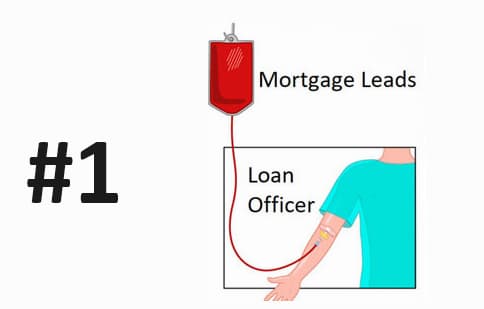
What is the most crucial thing any lender needs, no matter how big or small, whether they just started in business yesterday or have been in business for the last 50 years? The answer is LEADS. Leads to lenders are like blood to the body; direct lenders get leads directly from borrowers seeking loans, while wholesale lenders get leads from mortgage brokers. Lendersa is the ultimate lead-generation platform...

How Lendersa Works For Brokers

Lenders star rating

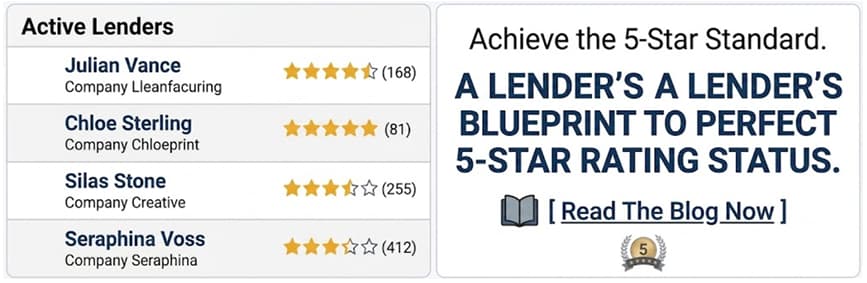
To win more deals on Lendersa, lenders must maintain a public 5-star rating, which serves as a powerful trust signal for borrowers. This rating is strictly data-driven, based entirely on communication speed and platform engagement. While standard message replies earn baseline points, the secret to dominating the platform is utilizing the Multi-Option Soft Quote tool. Providing fast, non-binding Soft Quotes with multiple loan options earns you up to 7.25 stars per interaction. This creates a mathematical "buffer" that protects your perfect 5-star public rating even if you occasionally miss a deadline. Ultimately, mastering this system guarantees higher visibility and increased deal flow.

Lenders star rating

Top 20 Direct Hard Money Lenders in Florida (2026 Guide)

Comprehensive guide which highlights the importance of using direct hard money lenders in Florida to bypass intermediary brokers, ensuring faster underwriting, direct capital control, and certain execution for real estate deals. It provides a curated directory of 20 verified private, asset-based lenders actively funding fix-and-flips, ground-up construction, and DSCR rental properties across the state. Features structured tables and detailed FAQs to help property investors compare direct financing against traditional banking routes. Ultimately, it emphasizes leveraging a competitive loan marketplace to streamline property analysis and secure optimal financing structures.

Top 20 Direct Hard Money Lenders in Florida (2026 Guide)

30 Top Direct Hard Money Lenders in Texas

This article helps Texas real estate investors secure the best asset-based financing by comparing the pros and cons of direct lenders versus brokers, introducing Lendersa's competitive marketplace, and providing a comprehensive contact directory of 30 top hard money lenders in the state.

30 Top Direct Hard Money Lenders in Texas

Ready to Reignite Your Lead Power!

You’re already part of the Lendersa® family—so let’s turn up the heat and make this your most exciting, lucrative season yet! Because guess what? Our leads are hotter than ever, and your next big deal could be just one call away.

Ready to Reignite Your Lead Power!

How Brokers Use Lendersa

Two Things Brokers Need There are two items mortgage brokers need: A. Mortgage Leads and B. Funding sources While some brokers already have their funding sources, their appetite for mortgage leads is unlimited. Leads Leads Leads What is the most important thing any lender needs, no matter how big or small, if they just started in business yesterday or have been in business for over 100 years? The answer is LEADS. Leads are to lenders like blood is to the body; direct lenders get leads directly from borrowers seeking loans, while wholesale lenders get leads from mortgage brokers. Lendersa is the ultimate lead-generation platform.

How Brokers Use Lendersa

Navigating FHA Loan Requirements in GA

The state of Georgia is a popular destination for many people looking to settle down, which is largely due to the affordable cost of living in the state. However, like most states in the US, buying a home in Georgia has still been out of reach for many, especially for those who don't qualify for traditional loans. This is where the Federal Housing Administration (FHA) comes in handy, as it provides a practical solution for many people through its loan programs. If you're looking to buy a home in Georgia, it's worth taking a closer look at FHA loan requirements.

Navigating FHA Loan Requirements in GA

How Can You Reduce Your Total Loan Cost?

Navigating through loan repayment can be a daunting task, but with the right knowledge and tools, you can significantly reduce the cost burden. The key is understanding the various strategies that exist to minimize the financial impact of loans. Here I’ve culled the top 5 ways to effectively reduce your loan costs and manage your debt more efficiently.

How Can You Reduce Your Total Loan Cost?

Understanding Student Loans Using Reddit

Using Reddit to understand student loans.

Understanding Student Loans Using Reddit

What Increases Your Total Loan Balance

5 Factors that cause your loan to mushroom 1. Interest Rates Interest rates are the most significant factor that determines your total loan balance. It’s the cost of borrowing money, and every loan has an interest rate associated with it. 2. Loan Terms The loan term is another critical factor that impacts your total loan balance. The loan term is the length of time it will take to repay the loan fully. 3. Late Fees Late fees are fees charged when you make a payment after the due date or miss payments altogether. 4. Additional Borrowing Additional borrowing is taking on more debt once you’ve already started repaying a loan. It might seem like an easy solution to acquire more credit, but additional borrowing puts you deeper in debt and makes it harder to repay your loan. 5. Payment Plan Changes Making changes to your repayment plan can impact your total loan balance.

What Increases Your Total Loan Balance

What Do You Mean Cashback Loan

There are numerous loan types and each comes with its own unique requirements and features, but is everyone on the same page when they talk about a cash back loan? The key to knowing which loan type is best for you is knowing what someone means when they say “cash back loan”. So let’s examine all the loan types that fall under this umbrella.

What Do You Mean Cashback Loan

Bad Credit Personal Loans

Financial emergencies are inevitable in life. An unexpected medical expense, car breakdown, or home repair can quickly put you in a precarious financial situation. If you have bad credit, accessing credit through traditional lenders may prove difficult. Fortunately, even if you have bad credit, guaranteed personal loans for $5,000 are not out of reach, there are lenders to help borrowers overcome their financial challenges. Today we’ll explore what you need to know about these loans.

Bad Credit Personal Loans

No Credit Check Payday Loans Guaranteed Approval

In times of financial emergency, getting quick cash is crucial. However, obtaining a loan can be a challenge, especially if you have bad credit. In such situations, no credit check payday loans with guaranteed approval seem like the perfect solution. But before you sign up for one, it’s essential to understand what they are, how they work, and the pros and cons.

No Credit Check Payday Loans Guaranteed Approval

Loan To Cost Ratio: What Borrowers Need to Know

Applying for a loan is a critical decision, especially when it comes to financing a considerable project with high construction and development costs. Whether you're building a commercial or residential property, you need to consider the amount of money required to complete construction successfully. In this post, we'll discuss what LTC is, how it works and its importance in a borrower's decision-making process.

Loan To Cost Ratio: What Borrowers Need to Know

Title Loans That Don't Require the Car

Title loans, also known as car title loans or auto title loans, are a type of secured loan where borrowers use their vehicle's title as collateral. These loans typically require the borrower to surrender the physical title of their vehicle to the lender until the loan is repaid. Some lenders require a vehicle inspection before lending the money and others still may require the vehicle itself be surrendered as a term of the loan. While title loans can provide quick access to cash, they come with risks. Title loans often come with high interest rates and fees, making them an expensive borrowing option. This is why it's crucial to do your research and look for a reputable title loan lender and read customer reviews to ensure you're working with a trustworthy company. Borrowers with bad credit or no credit history may be eligible for a title loan since the vehicle acts as collateral, reducing the lender's risk. However, if the borrower fails to make the monthly payments, they also risk losing their vehicle

Title Loans That Don't Require the Car

Fast Approval Real Estate Loans Without Proof of Income

Yes, it is possible to get a real estate loan without proof of income. Lenders offer alternative documentation options such as bank statement loans or asset-based loans, where the borrower's income is verified through other means like bank statements or the value of their assets. Are you a self-employed individual, freelancer, or contractor who has been struggling to get a real estate loan due to lack of income verification? Look no further, as we have got you covered. In this blog, we will be talking about no income verification loans that are designed specifically for individuals like you who may not have traditional income documentation. We will walk you through the basics of these loans, various types available in the market, and their advantages and disadvantages. Additionally, we will also provide tips on how to identify the right lender and factors to consider before applying for these loans. So if you're looking to purchase a new home or investment property without providing income proof, keep read

Fast Approval Real Estate Loans Without Proof of Income

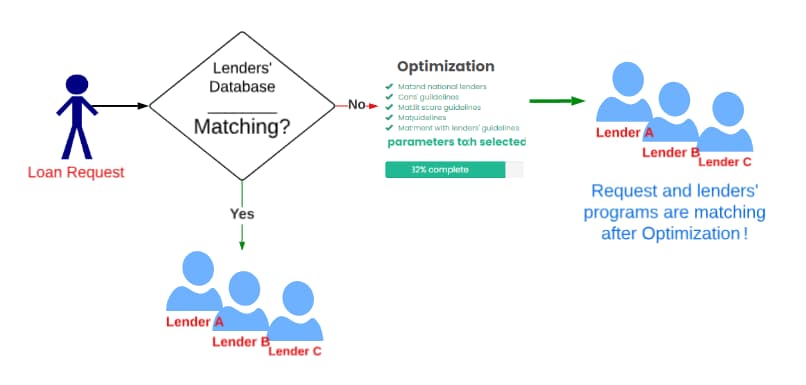
Optimize Your Loan with Lendersa

Lendersa platform offers a unique approach to loan optimization, tailoring the loan options to your specific financial profile. We follow a six-step process that includes selecting urgency in loan application, choosing your first priority in loan optimization, determining your second priority in loan optimization, deciding the minimum time for loan duration, selecting the maximum length of prepayment penalty, and utilizing the optimization button. In this blog post, we will explain how our solutions can help you optimize your loan experience and list down the key benefits of using Lendersa for loan optimization.

Optimize Your Loan with Lendersa

How Loan Optimization Works?

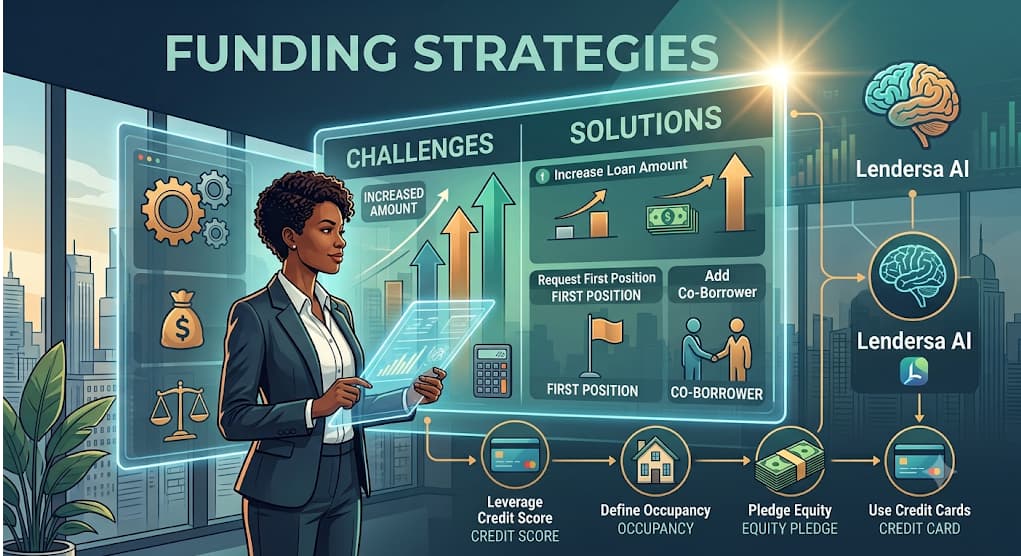
Use the Lendersa Loan Optimization tool to get your loan approved and see that you are getting the best possible rate and terms. Several options could be available to increase your loan chances for approval or a better loan. Among the most common options are: Slightly reducing the loan amount Raising the appraised value (3 methods) Adding another property with equity Slightly improving your credit score Changing the method of verifying income Adding Income source with a Co-Borrower

How Loan Optimization Works?

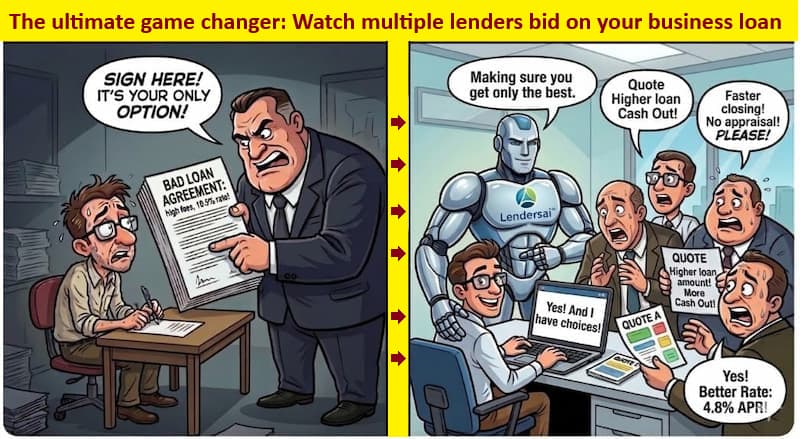
How Mortgage Brokers Rip You Off

Some common ways mortgage brokers can rip you off include charging excessive fees, steering borrowers towards higher interest rate loans, and not fully disclosing all the terms and conditions of the loan. Doing thorough research and working with a reputable broker is important to avoid these pitfalls. Knowing how hard money lenders work can save you thousands of dollars on your next loan. Don't get ripped off by mortgage brokers and loan sharks because you don't know the rules of the game. This guide shows you how avoid being cheated by unscrupulous lenders and how to find the best lenders for residential or commercial loans. (Better rate, longer terms, more money, etc.)

How Mortgage Brokers Rip You Off

Exploring the World of Private Money Lending

Are you a real estate investor or looking to invest in one? Have you ever heard of private money lending? This alternative lending option has been gaining popularity in recent years and for good reason. In this blog, we will explore the world of private money lending in real estate and answer all your questions. We'll start by discussing why it's becoming such a popular option and then dive into the basics of how it works. You'll learn about the key players involved, including lenders and borrowers, and the role that collateral plays. We'll also cover the advantages and disadvantages of private money lending, as well as potential risks involved. If you're wondering whether private money lending is right for you, we've got you covered with some key considerations. And finally, we'll take a closer look at navigating foreclosures and subprime lending within this market, as well as what to look for in a private money lender. So let's get started!

Exploring the World of Private Money Lending

Top Hard Money Lenders for Instant Loans

Are you in urgent need of a loan? Are traditional lenders turning you down? Hard money loans may be the solution you're looking for. In this blog, we'll explore the world of hard money lending and its significance in today's financial market. We'll dive into the details about how hard money loans work and their role in financing. Additionally, we'll identify the top hard money lenders for instant loans, including why Kiavi stands out among other lenders. We will also discuss the borrower's perspective and what makes a good lender. For real estate flippers, we'll explain why hard money loans are essential and how to choose the best lender for your needs. Lastly, we'll cover how hard money loans can help prevent foreclosure, funding renovation projects, and why an accurate appraisal is crucial for securing a hard money loan. So sit back and let us guide you through everything you need to know about hard money loans.

Top Hard Money Lenders for Instant Loans

How to Get Leads - Profile Leads Capture

Set up your account to get leads and learn to do a profile lead capture. Even if you have registered, your account may not be set up to receive leads. Follow these steps to ensure that all leads that match your criteria can be sent to you:

How to Get Leads - Profile Leads Capture

How to Get Leads - Loan Input Program

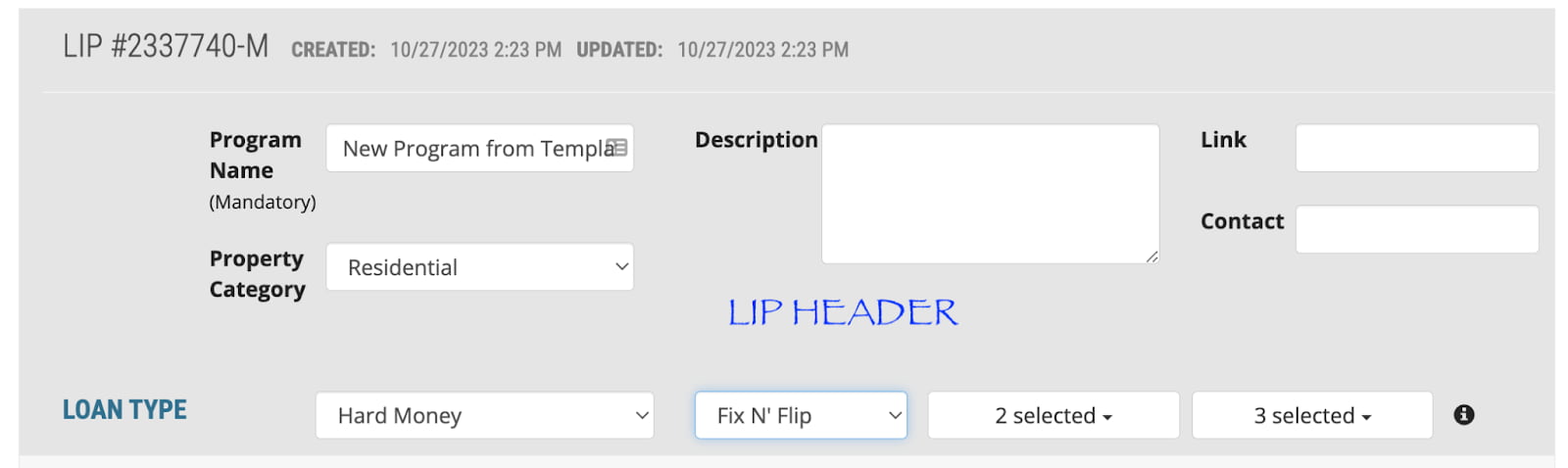
Even if you have registered, your account may not be set up to receive leads. Follow these steps to ensure that all leads that match your criteria can be sent to you. Learn how to set up your account to get leads by filling in a loan input program. LIP- a Loan Input Program is a digital form that holds a matrix of your loan programs. You can have several LIPs. Templates - There are several templates that can be changed to fit your unique loan programs and saved as your own LIP. Here we want to show you how to create your first LIP from a Template in order to start getting leads.

How to Get Leads - Loan Input Program

Loan Input Program - Advanced

This blog covers an in depth look at the different portions of a Loan Input Program (LIP) and how to fill it in, getting the precise information, rate, terms, etc. to match your loan program/underwriting guidelines. LIP HEADER: This is the easiest section of the LIP. Each field should be completed in this section with each drop down menu being clicked and the correct item selected. QUALIFICATIONS: We will go over how to use the LTV & Credit Grid as well as Loan Amount Ranges Grid below. For the other fields, click and input the correct information for your program. You can also use our LIP Tutorials for more practice and examples.

Loan Input Program - Advanced

Registering on Lendersa

Learn how to log in and register on the Lendersa website and create a profile lead capture to ensure your account is set up to receive the type of leads you want. Option for express registration. HOW TO GET LEADS Creating a Profile Lead Capture (PLC) is sometimes done as part of the registration process.

Registering on Lendersa

Profile Lead Capture (PLC) for Hybrid Lenders

The blog post explains why Hybrid lenders should enter separate Profiles based on the role they are taking. A hybrid lender can have three roles: A. that of a Loan Broker, B. that of a direct retail Lender, and C. that of a Wholesale Lender. See examples of best placing your Profile Lead Captures to the most leads without jeopardizing the lead quality.

Profile Lead Capture  (PLC) for Hybrid Lenders

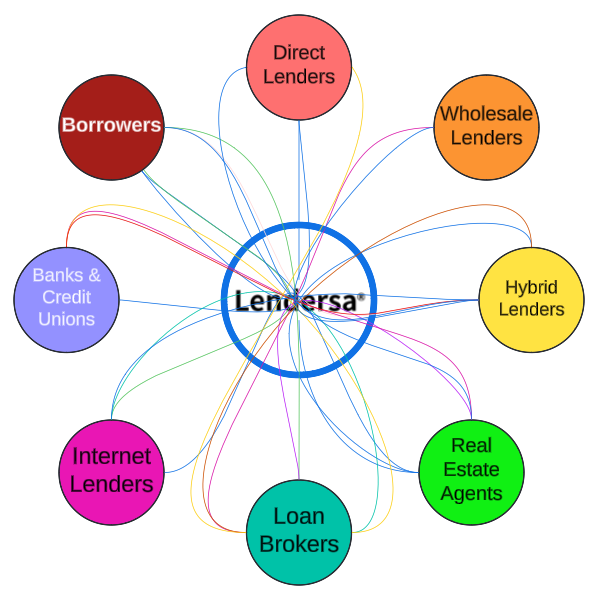
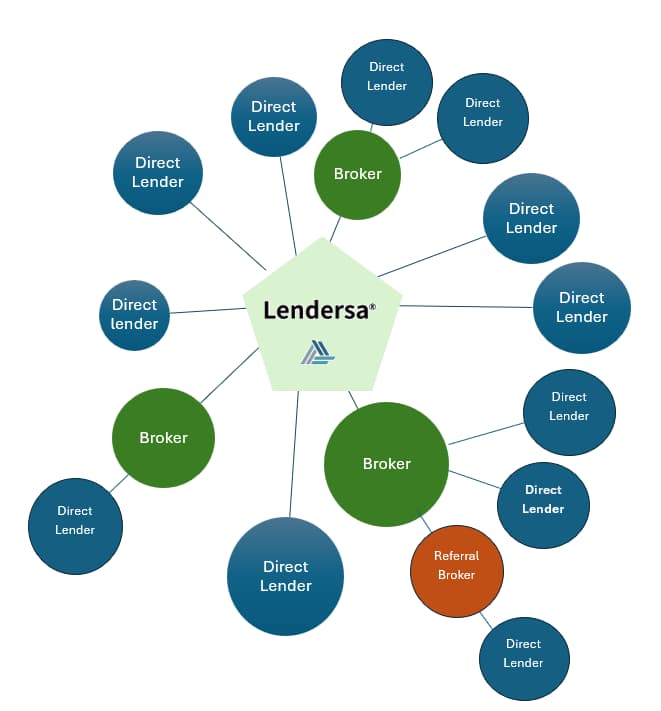
What are Types of Mortgage Lenders ?

Three basic types of mortgage lenders exist: Direct Lenders, Loan Brokers, and Wholesale Lenders. Many Direct Lenders act as Hybrid Lenders, which allows them to switch from one type to another as circumstances require. The types of lenders are different from the types of loans. Property type, loan position, income, credit, and other factors can be categorized into hundreds of loan types. Each type of lender could be engaging in arranging several types of loans. Using Lendersa® Portal, a borrower does not have to worry about the distinction between types of lenders because your loan request will be reviewed by the most qualified lender regardless of their type. Wholesale Lenders will only contact brokers submitting loans on behalf of their clients.

What are Types of Mortgage  Lenders ?

Five Ingredients of Real estate Development Loan

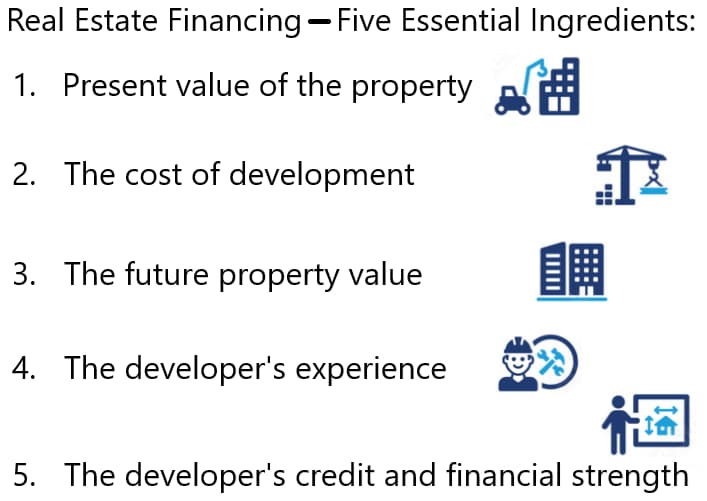
Every financing of real estate projects requires five basic ingredients: 1. Present value of the property 2. The cost of development 3. The future property value 4. The developer's experience 5. The developer's credit and financial strength Depending on the project's scope, each of the five ingredients may need to be verified and documented before any loan approval.

Five Ingredients of Real estate Development Loan

Asset-Based Loans - Comprehensive Guide

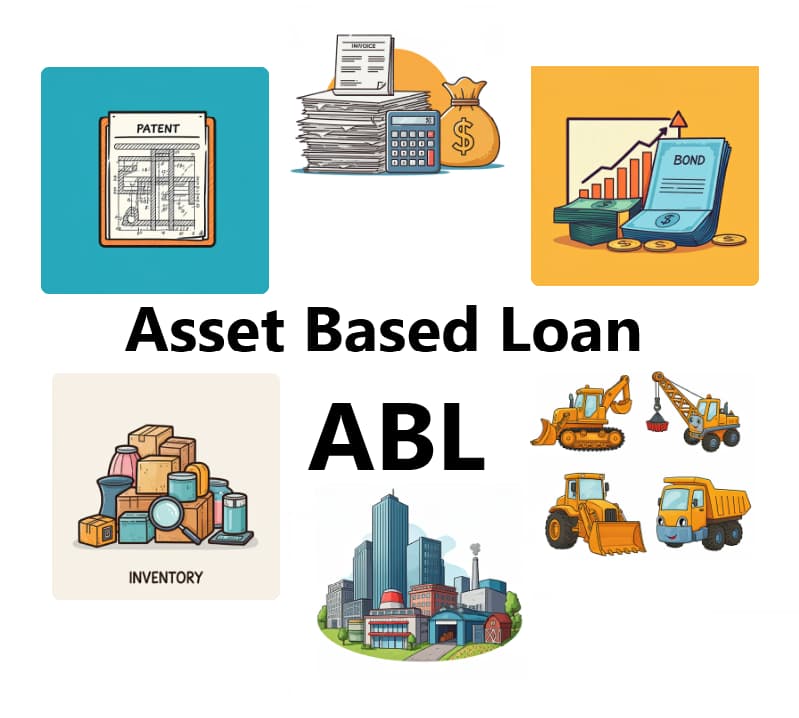
Do you know about the 6 types of ABLs? Asset-based loans are structured around the value of a borrower's assets. For businesses, these assets often include inventory, equipment, and, importantly, accounts receivable. By leveraging these assets, companies can obtain financing that might not be available through traditional lending avenues. Traditional business financing usually looks at how much money a company makes (its cash flow) to decide if it can get a loan. This method works well for many businesses. However, some companies might have assets (like property, accounts receivable, equipment, marketable securities, or intellectual properties and trademarks) that they can use to get a loan, even if their cash flow isn't strong. This is called asset-based Lending (ABL). With ABL, you can use various assets as collateral to get the money you need. If your business has valuable assets, ABL can give you a good amount of financing with fewer restrictions, allowing you more freedom in future decisions compa

Asset-Based Loans - Comprehensive Guide

Asset-Based Loan Secured by Accounts Receivable

Do you know about the 6 types of ABLs? Asset-based loans are structured around the value of a borrower's assets. For businesses, these assets often include inventory, equipment, and, importantly, accounts receivable. By leveraging these assets, companies can obtain financing that might not be available through traditional lending avenues. Traditional business financing usually looks at how much money a company makes (its cash flow) to decide if it can get a loan. This method works well for many businesses. However, some companies might have assets (like property, accounts receivable, equipment, marketable securities, or intellectual properties and trademarks) that they can use to get a loan, even if their cash flow isn't strong. This is called asset-based Lending (ABL). With ABL, you can use various assets as collateral to get the money you need. If your business has valuable assets, ABL can give you a good amount of financing with fewer restrictions, allowing you more freedom in future decisions compa

Asset-Based Loan Secured by Accounts Receivable

Asset-Based Loan Secured by Inventory

Do you know about the 6 types of ABLs? Asset-based loans are structured around the value of a borrower's assets. For businesses, these assets often include inventory, equipment, and, importantly, accounts receivable. By leveraging these assets, companies can obtain financing that might not be available through traditional lending avenues. Traditional business financing usually looks at how much money a company makes (its cash flow) to decide if it can get a loan. This method works well for many businesses. However, some companies might have assets (like property, accounts receivable, equipment, marketable securities, or intellectual properties and trademarks) that they can use to get a loan, even if their cash flow isn't strong. This is called asset-based Lending (ABL). With ABL, you can use various assets as collateral to get the money you need. If your business has valuable assets, ABL can give you a good amount of financing with fewer restrictions, allowing you more freedom in future decisions compa

Asset-Based Loan Secured by Inventory

ABL (Asset-Based Loan) Secured by Equipment

Do you know about the 6 types of ABLs? Asset-based loans are structured around the value of a borrower's assets. For businesses, these assets often include inventory, equipment, and, importantly, accounts receivable. By leveraging these assets, companies can obtain financing that might not be available through traditional lending avenues. Traditional business financing usually looks at how much money a company makes (its cash flow) to decide if it can get a loan. This method works well for many businesses. However, some companies might have assets (like property, accounts receivable, equipment, marketable securities, or intellectual properties and trademarks) that they can use to get a loan, even if their cash flow isn't strong. This is called asset-based Lending (ABL). With ABL, you can use various assets as collateral to get the money you need. If your business has valuable assets, ABL can give you a good amount of financing with fewer restrictions, allowing you more freedom in future decisions compa

ABL (Asset-Based Loan) Secured by Equipment

Asset-Based Loan Secured by Real Estate

Do you know about the 6 types of ABLs? Asset-based loans are structured around the value of a borrower's assets. For businesses, these assets often include inventory, equipment, and, importantly, accounts receivable. By leveraging these assets, companies can obtain financing that might not be available through traditional lending avenues. Traditional business financing usually looks at how much money a company makes (its cash flow) to decide if it can get a loan. This method works well for many businesses. However, some companies might have assets (like property, accounts receivable, equipment, marketable securities, or intellectual properties and trademarks) that they can use to get a loan, even if their cash flow isn't strong. This is called asset-based Lending (ABL). With ABL, you can use various assets as collateral to get the money you need. If your business has valuable assets, ABL can give you a good amount of financing with fewer restrictions, allowing you more freedom in future decisions compa

Asset-Based Loan Secured by Real Estate

Asset-Based Loan Secured by Stock and Bonds

Do you know about the 6 types of ABLs? Asset-based loans are structured around the value of a borrower's assets. For businesses, these assets often include inventory, equipment, and, importantly, accounts receivable. By leveraging these assets, companies can obtain financing that might not be available through traditional lending avenues. Traditional business financing usually looks at how much money a company makes (its cash flow) to decide if it can get a loan. This method works well for many businesses. However, some companies might have assets (like property, accounts receivable, equipment, marketable securities, or intellectual properties and trademarks) that they can use to get a loan, even if their cash flow isn't strong. This is called asset-based Lending (ABL). With ABL, you can use various assets as collateral to get the money you need. If your business has valuable assets, ABL can give you a good amount of financing with fewer restrictions, allowing you more freedom in future decisions compa

Asset-Based Loan Secured by Stock and Bonds

Asset-Based Loan Secured by Intellectual Property

Do you know about the 6 types of ABLs? Asset-based loans are structured around the value of a borrower's assets. For businesses, these assets often include inventory, equipment, and, importantly, accounts receivable. By leveraging these assets, companies can obtain financing that might not be available through traditional lending avenues. Traditional business financing usually looks at how much money a company makes (its cash flow) to decide if it can get a loan. This method works well for many businesses. However, some companies might have assets (like property, accounts receivable, equipment, marketable securities, or intellectual properties and trademarks) that they can use to get a loan, even if their cash flow isn't strong. This is called asset-based Lending (ABL). With ABL, you can use various assets as collateral to get the money you need. If your business has valuable assets, ABL can give you a good amount of financing with fewer restrictions, allowing you more freedom in future decisions compa

Asset-Based Loan Secured by Intellectual Property

From Loan Request to Funding – How Does Lendersa® Work

Understanding how Lendersa works for borrowers is critical to your success. Thousands of lenders could potentially fund your loan, and we want to ensure that only the best lender with the best rate, terms, and loan conditions you fulfill quickly is elected to fund your loan. Conventional loans, FHA, Commercial loans, SBA, Vacant land loans, and Hard money loans are all being done with the help of Lendersa AI, and they all follow the same steps described in an information blog.

From Loan Request to Funding – How Does Lendersa® Work

How to get the borrower's contact information

ometimes, borrowers require a letter of introduction or a soft quote before divulging their contact information. To get the contact information, follow the steps below. After you do it once, sending an introduction message will take you less than a minute. Composing a soft quote could take 3-5 minutes, but it may be worth it. Hopefully, your competitive soft quote will net you the loan, but if your quote is unacceptable, you will not need to waste any more time with this client. You could manage an introduction message with four clicks without writing anything :

How to get the borrower's contact information

Getting your loan approved by multiple lenders

This blog gives instructions on getting a loan request approved by multiple lenders or improving the quality of a loan for better approval. This blog applies to general hard money loans. For Fix N Flip loans, construction, or vacant land loans, we have specific instructions and advanced calculators.

Getting your loan approved by multiple lenders

How to Pitch Your Loan Request to Lenders

Uploading documents will save you hours of explanation. Find out which documents are required, and which are usually requested.Get examples of what to say and what information to provide your lenders to save hours of explanation and fast track your loan for review and approval.

How to Pitch Your Loan Request to Lenders

Maximum Fix and Flip loan amount in your state

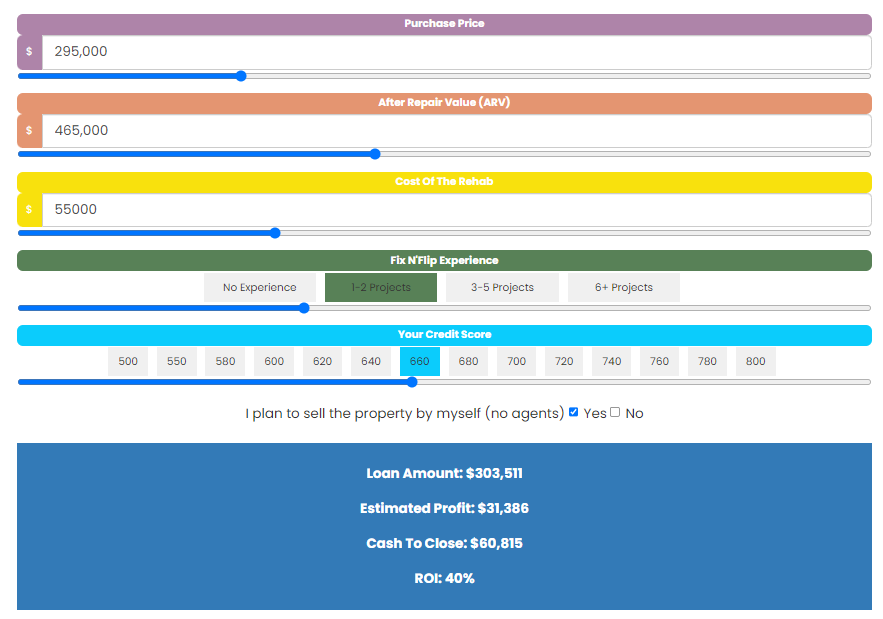
Lendersa Fix and Flip calculator finds the most money you can borrow on your Fix N' Flip project based on the purchase price, ARV, rehab costs, credit, experience, and property location. Each State is a little different because of property tax insurance and regulations.

Maximum Fix and Flip loan amount in your state

Direct Hard Money lenders

Discover the pros and cons of direct hard money lenders in our latest blog post. Learn more about direct hard money lenders today. Direct hard money lenders provide loans directly to the borrower, cutting out the need for a mortgage broker. This can be advantageous for those looking for quick financing or who may not qualify for traditional bank loans. Working with a direct lender can streamline the borrowing process and provide more flexibility in loan terms. However, it's essential to carefully research and compare options to ensure you are getting the best deal for your financial situation, especially when it comes to the application process.

Direct Hard Money lenders

commercial-equity-loan-guide-for-beginners

Commercial real estate investors and business owners often find themselves in need of additional funds to finance property improvements, purchase new assets, or expand their business. In such cases, a commercial equity loan can be a viable solution. By leveraging the equity they have built up in their commercial property, borrowers can access a lump sum of cash to meet their financial needs. A commercial equity loan is similar to a commercial cash-out refinance, as both involve refinancing the property to access funds. However, while a cash-out refinance provides a one-time, lump sum amount, a commercial equity loan allows borrowers to access funds as needed. This flexibility can be beneficial for businesses that have varying cash flow requirements or for real estate investors who may need funds for property rehabilitation or acquisition. To secure a commercial equity loan, borrowers need to evaluate their property's equity, gather the necessary documentation, and apply with multiple lenders to compare

commercial-equity-loan-guide-for-beginners

Hard money lenders definition

Find out the different types of lenders and how they interact to fund hard money loans. This blog sheds light on the web of brokers and lenders cooperating to fund a private hard money loan and their relationship.

Hard money lenders definition

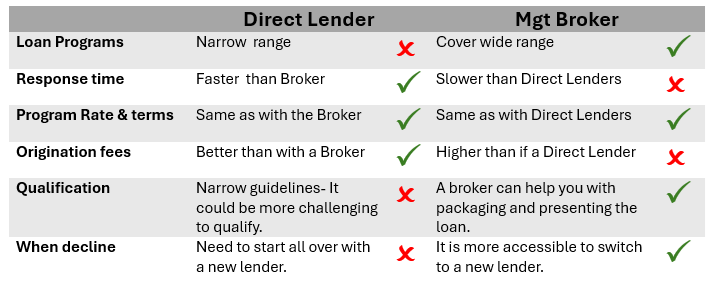
Which are Better Direct Lenders or Hard Money Brokers?

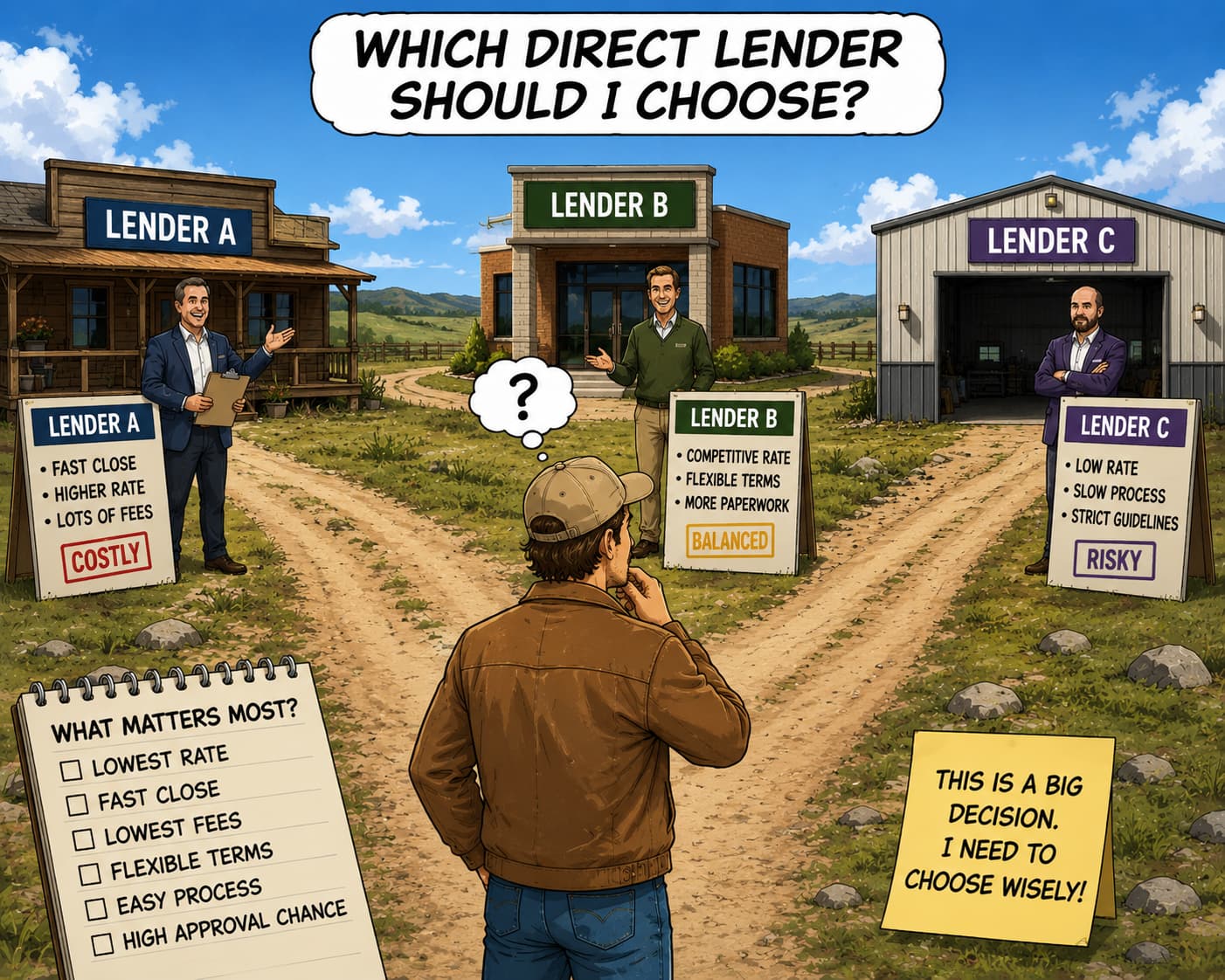
Many would-be borrowers have a misconception that direct lenders are the only way to go when searching for a real estate loan. While Direct Lenders could be the most logical solution for a loan, they often cannot approve the Borrower's specific loan scenario. As a result, the Borrower could lose a purchase opportunity or, if it was a refinance loan, start all over again with a new lender. Who are better, Direct Lenders or Hard Money Brokers? Direct lenders can quickly approve your loan, but only if your request fits their typically narrow, well-defined type of loan. Hard money brokers are usually connected to several direct lenders, so you can get several approvals to select the best. A good broker will advise you and package your loan for the correct presentation, resulting in funding. Conclusion: You should contact both direct lenders and hard money brokers, especially if there are issues with the property, the borrowers' credit income, etc.

Which are Better Direct Lenders or Hard Money Brokers?

Private Hard Money Lenders for $10M to $100M Real Estate Projects

Securing commercial real estate loans between $10 million and $100 million requires moving beyond traditional banking. This comprehensive guide explores the complex landscape of mega-cap private lending. It breaks down how underwriting evolves at the eight- and nine-figure levels, including the strategic use of equity kickers to fund high-risk or early-stage assets like raw land subdivisions and high-tech data centers. Borrowers will learn the critical differences between direct lenders, brokers, and hybrid funds, as well as the red flags to watch for to avoid costly execution risks. Finally, the article introduces Lendersa’s proprietary AI matching agent. By helping developers craft an institutional-grade Executive Summary, Lendersa creates a secure, blind-auction environment. This technology forces top-tier capital sources to compete for the deal simultaneously, ensuring developers secure the best leverage and rates while maintaining total privacy until they are ready to move forward.which pairing you choos

Private Hard Money Lenders for $10M to $100M Real Estate Projects

40 Fast-Closing Hard Money Lenders (Fund in 7 Days or Less)

In the fast-paced world of real estate investing, funding speed can make or break a deal. Our latest article, "40 Fast-Closing Hard Money Lenders," is your ultimate guide to securing capital in seven days or less. We break down LTV requirements for a rapid close and explain the critical differences between direct lenders, brokers, and hybrid lenders. While we highlight 40 excellent nationwide examples, relying on a single capital source is a fatal mistake. Lendersa’s network actually comprises over 600 active local lenders—private investors who intimately understand their own markets and can frequently outspeed the big national names. To save your sanity, we reveal how to use Lendersa’s free, AI-powered dashboard to effortlessly juggle multiple lenders, selectively share documents, and instantly compare competing offers side-by-side. Read the full guide to discover the smartest way to fund your next real estate investment

40 Fast-Closing Hard Money Lenders (Fund in 7 Days or Less)

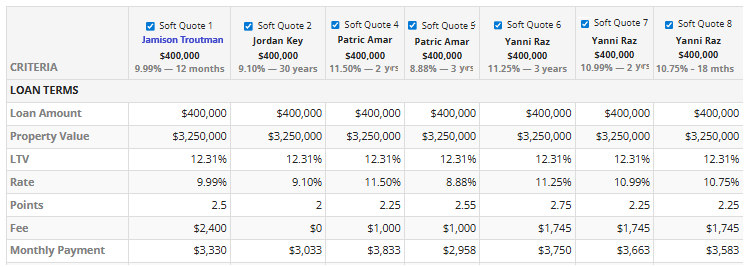
Compare Hard Money Loan Rates Without a Credit Pull

This guide addresses a common challenge for real estate investors: shopping for hard money loans without damaging their credit score through multiple hard inquiries. It outlines a four-step strategy to protect your credit while still securing competitive rates. The article opens by explaining why credit pulls matter. Repeated hard inquiries can lower your score and push borrowers into higher rate brackets, a particular concern for active investors managing several deals at once. The four steps recommended are: first, check your own credit score through a soft-pull service and have your "stated" FICO ready to share with lenders; second, use a centralized multi-lender marketplace (such as Lendersa) that aggregates preliminary quotes without triggering hard inquiries; third, contact lenders in "rate-shopping mode," providing a detailed deal summary including property type, purchase price, ARV, credit score, and investment experience, to obtain Preliminary Term Sheets without authorizing a credit pull; and four

Compare Hard Money Loan Rates Without a Credit Pull

No Doc Real Estate Loans: Get Funded in 7 days

Target Audience: Real estate investors, house flippers, and landlords frustrated by traditional bank delays and invasive income verification. Primary Objective: To educate borrowers on how asset-based lending (Hard Money and DSCR) works, and to provide a clear, actionable blueprint for organizing their files to successfully close a loan in one week using the Lendersa platform.

No Doc Real Estate Loans: Get Funded in 7 days

5 Negotiation Tactics That Make Private Lenders Fight for Your Deal

This article explores how today’s private lending market—flush with capital—gives real estate investors a unique advantage in negotiations. It outlines five key tactics to shift leverage toward borrowers: strengthening deal attractiveness with LoanScore, creating competition through parallel term sheets, using transparency to increase urgency, expanding lender options with AI-driven matching, and keeping backup lenders ready. Together, these strategies help investors reduce borrowing costs, improve terms, and ensure smoother, faster closings.

5 Negotiation Tactics That Make Private Lenders Fight for Your Deal

100% LTV from Hard Money Lenders

Gemini said For real estate investors seeking maximum leverage, securing a 100% Loan-to-Value (LTV) hard money loan is the ultimate goal. This guide explores how to finance an entire investment property purchase, effectively reducing out-of-pocket acquisition costs to zero. Achieving a true 100% LTV is challenging, as traditional lenders typically cap leverage at 80%. Success requires an exceptional deal and a strong borrower profile. The guide highlights three primary pathways to zero-down approval: buying deeply discounted distressed properties, executing high-margin value-add rehabs, or utilizing cross-collateralization via blanket loans. To qualify, investors need built-in equity, proven flipping experience, solid credit, and adequate reserves. To streamline the search, the article provides a curated directory of 40 high-leverage private lenders. It also introduces the Lendersa® platform, where investors can submit a single, fast request to be instantly matched with specialized lenders capable of f

100% LTV from Hard Money Lenders

The 25 Best Non-QM & DSCR Lenders of 2026 (And How to Find Your Lowest Rate)

If you are searching for the 'best Non-QM lenders' or the 'top DSCR lenders,' you have probably realized that no single lender is the 'best' for everyone. A lender offering the lowest DSCR rate for an 800-credit score investor might reject a 640-credit score flipper entirely. > That is why searching for lenders manually is a broken system. Instead of guessing which lender's box you fit into, Lendersa® acts as your ultimate cheat code. Our Artificial Intelligence doesn't just give you a list; it instantly scans the guidelines of over 200 Non-QM and Hard Money lenders nationwide to match your specific scenario with the absolute best rate and terms

The 25 Best Non-QM & DSCR Lenders of 2026 (And How to Find Your Lowest Rate)

Commercial Property Loan Without SSN: 5 Steps to a Fast Proposal

This guide outlines a streamlined five-step process for obtaining a fast commercial loan proposal without an SSN. It explains that commercial lenders focus primarily on property income and equity rather than personal credit, making financing accessible to foreign nationals and entity-based investors. The steps cover choosing the right borrower identification method (ITIN, EIN, or passport), preparing a strong property profile, improving your LoanScore, submitting your loan scenario to receive multiple offers, and selecting the best term sheet. The article also highlights key loan types like DSCR and hard money loans, compares lending options, and emphasizes the importance of cash flow, DSCR, and competitive offer evaluation in securing favorable terms quickly.

Commercial Property Loan Without SSN: 5 Steps to a Fast Proposal

How AI Loan Matching Connects Your Deal to Hundreds of Lenders

Manual lender outreach limits options and slows down commercial borrowers, while AI loan matching platforms instantly connect you to better, more competitive loan offers.

How AI Loan Matching Connects Your Deal to Hundreds of Lenders

Refinancing a Bridge Loan Into a Long-Term Commercial Mortgage on a Vacant Property

Refinancing a bridge loan into a long-term commercial mortgage on a vacant property is possible, but challenging. Since permanent lenders rely on property income, you typically need to lease up the building and reach minimum cash flow benchmarks—especially a debt-service coverage ratio (DSCR) of around 1.20x–1.25x—before qualifying. The process involves completing renovations, securing tenants, improving occupancy, and selecting the right permanent loan. If stabilization isn’t achieved in time, options like loan extensions or additional financing can help bridge the gap.

Refinancing a Bridge Loan Into a Long-Term Commercial Mortgage on a Vacant Property

What Documents Are Required for a Non-Recourse Commercial Real Estate Loan?

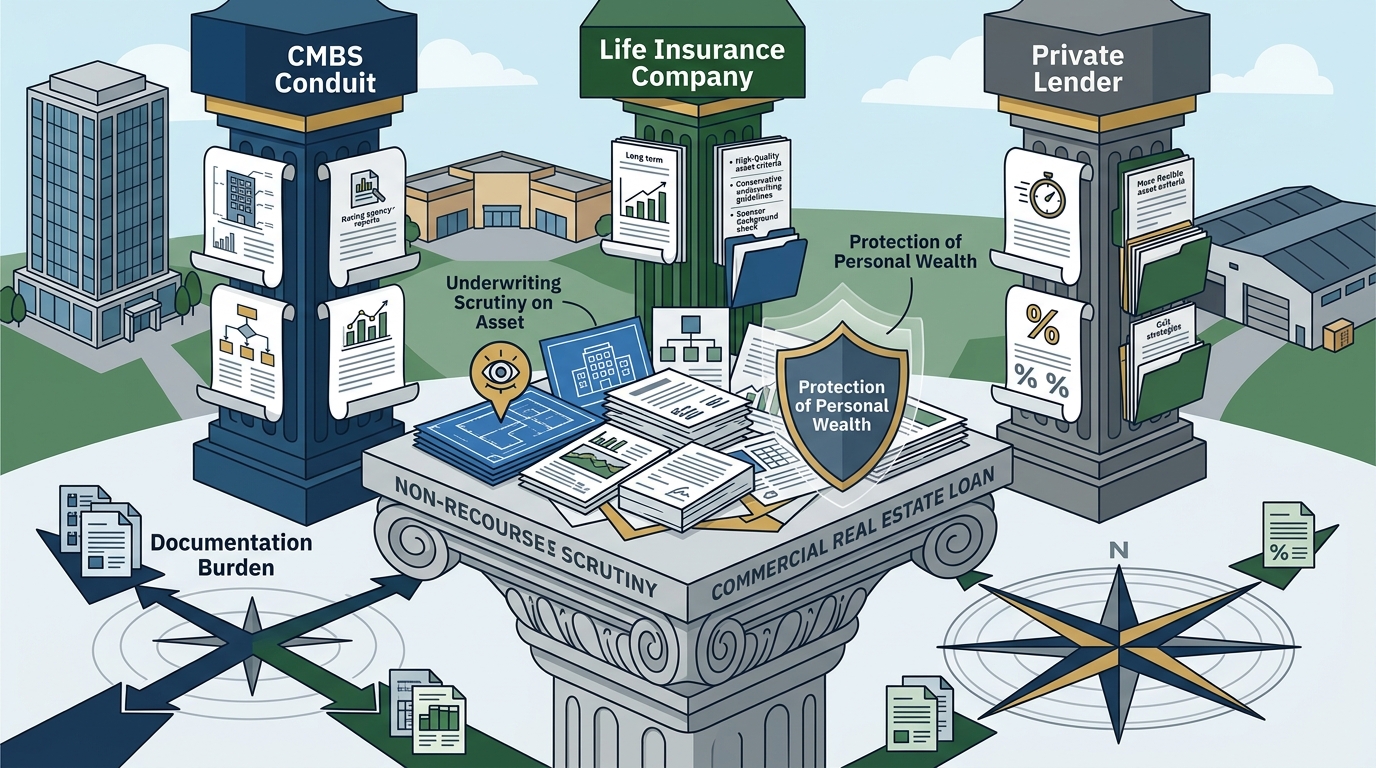
This guide outlines all the documents required for a non-recourse commercial real estate loan, including borrower credentials, entity formation, property financials, third-party reports, and closing documents. It also explains how requirements vary by lender type, the role of special purpose entities (SPEs), and how bad-boy carve-outs impact liability. Designed for investors and sponsors, this resource helps streamline the application process and improve the chances of a successful closing.

What Documents Are Required for a Non-Recourse Commercial Real Estate Loan?

Real Estate Lending Marketplace

This article explores the radical transformation of real estate financing from rigid traditional banking to specialized, highly efficient digital platforms. By acting as algorithmic matchmakers, lending marketplaces connect borrowers directly with diverse capital sources, injecting unprecedented speed, competition, and transparency into the loan origination process. The piece categorizes the modern lending ecosystem into specialized niches: consumer-focused rate aggregators such as LendingTree and Bankrate; essential B2B directories for mortgage brokers, such as Scotsman Guide; and powerful commercial engines such as CommLoan and Lendersa. Notably, Lendersa is highlighted for connecting real estate investors and developers with unconventional local lenders to fund hard-money, vacant-land, and complex commercial deals that traditional banks typically reject. Furthermore, the article contrasts the digital marketplace experience with utilizing direct lenders or traditional mortgage brokers, outlining the disti

Real Estate Lending Marketplace

Commercial Property Loan Without SSN: Steps to a Fast Proposal

This article explains how borrowers can secure U.S. commercial property financing without a Social Security Number by structuring the application around the asset, using ITIN or EIN where applicable, and presenting a clear repayment story. It focuses on practical ways to improve approval odds and speed up lender review.

Commercial Property Loan Without SSN: Steps to a Fast Proposal

Shop Hard‑Money Loan Rates Without a Credit Pull

Many hard-money lenders use asset-based underwriting but still consider credit when pricing loans; nevertheless, investors can shop widely without multiple hard inquiries by preparing a stated credit profile, using centralized marketplaces or soft-pull tools, requesting preliminary term sheets, and comparing total cost-of-capital (interest, points, fees, penalties, and draw costs). This guide walks through each step and shows what to include in lender requests so you receive actionable, comparable quotes while keeping your credit report untouched.

Shop Hard‑Money Loan Rates Without a Credit Pull

Make Private Money Lenders Compete for Your Deal

Instead of accepting the first private‑money offer, smart investors present their deal in a clear, standardized format and invite several lenders to quote. This article walks through what to prepare (project specs, ARV, LTV, exit plan, borrower profile), how to use lender marketplaces to trigger competition, and how to read and compare term sheets—so you can pit lenders against each other and land the best all‑in financing package for your deal.

Make Private Money Lenders Compete for Your Deal

How to Assemble Your Non-Recourse Commercial Real Estate Loan Package: A Phase-by-Phase Document Guide

The article explains that borrowers should organize financial statements, tax returns, entity formation documents, rent rolls, operating statements, appraisals, environmental reports, and insurance records before applying. It also emphasizes that lenders review both the property’s income potential and the sponsor’s credibility, and that “bad boy carve-out” clauses can convert limited liability into full recourse if fraud or other misconduct occurs.

How to Assemble Your Non-Recourse Commercial Real Estate Loan Package: A Phase-by-Phase Document Guide

How to Get an Instant Commercial Loan Proposal Without an SSN

The page explains how borrowers can speed up a commercial property loan proposal by preparing basic business and property details in advance, even when they do not have an SSN. It frames the process around lender-friendly identity and business verification options, and notes that different documentation routes may apply depending on whether the borrower uses an ITIN, EIN, or passport-only profile.

How to Get an Instant Commercial Loan Proposal Without an SSN

Get an Instant Commercial Loan Proposal Without an SSN

This guide explains how investors can pursue a U.S. commercial property loan without a Social Security Number. It covers alternative identification options like ITIN and EIN, the key elements of a strong loan proposal, and practical steps to improve approval odds. The article is aimed at helping borrowers present a clear, credible deal package to lenders.

Get an Instant Commercial Loan Proposal Without an SSN

Best Platform to Match Commercial Loans With Lenders

This article reviews leading commercial loan matching platforms and explains how they help borrowers connect with the right lenders. It covers lender-fit screening, deal packaging, and the role of marketplace tools in speeding up commercial real estate financing. The page is geared toward borrowers, sponsors, and brokers who want a more efficient path to term sheets.

Best Platform to Match Commercial Loans With Lenders

Legitimate Private Lender vs Loan Shark: 7 Warning Signs

This article reviews leading commercial loan matching platforms and explains how they help borrowers connect with the right lenders. It covers lender-fit screening, deal packaging, and the role of marketplace tools in speeding up commercial real estate financing. The page is geared toward borrowers, sponsors, and brokers who want a more efficient path to term sheets.

Legitimate Private Lender vs Loan Shark: 7 Warning Signs

Direct Hard Money Lenders for Vacant Land & Subprime Loans

This article explains how direct hard money lenders evaluate vacant land and subprime residential deals. It highlights equity-driven lending, faster closings, and the types of borrowers and properties that may fit these programs. The guide is useful for investors who need non-bank financing for land or distressed residential properties.

Direct Hard Money Lenders for Vacant Land & Subprime Loans

Vacant Land and Subprime Residential Loans from Direct Hard Money Lenders

This guide covers how direct hard money lenders evaluate vacant land and subprime residential deals. It explains common underwriting factors such as equity, exit strategy, borrower experience, and property status, while showing why these loans often close faster than traditional bank financing. The article is aimed at real estate investors, builders, and borrowers needing non-bank capital for land or distressed housing assets

Vacant Land and Subprime Residential Loans from Direct Hard Money Lenders

5 Proven Channels to Locate Direct Hard Money Lenders for Vacant Land and Subprime Residential Deals

This guide explains how direct hard money lenders evaluate vacant land and subprime residential deals. It covers common factors like property type, borrower experience, exit strategy, and loan-to-value, with a focus on faster funding than traditional bank loans. The article is designed for investors and borrowers seeking non-bank financing for land acquisition or distressed residential properties.

5 Proven Channels to Locate Direct Hard Money Lenders for Vacant Land and Subprime Residential Deals

Skip the Credit Pull: A Practical Playbook for Comparing Hard Money Loan Rates

This article explains how borrowers can compare hard money loan rates without triggering a credit inquiry. It focuses on rate-shopping strategies, lender screening, and the deal factors that matter most in hard money lending, such as collateral value, loan-to-value, and exit strategy. The page is designed for investors who want to evaluate options quickly while keeping their credit pull to a minimum.

Skip the Credit Pull: A Practical Playbook for Comparing Hard Money Loan Rates

5 Tactics That Force Private Money Lenders to Compete for Your Real Estate Deal

This page explains how borrowers can attract multiple private money lenders to compete for the same deal. It highlights the benefits of lender competition, including better rates, faster responses, and more flexible terms. The article is aimed at real estate investors and borrowers who want to maximize options and improve their financing outcome.

5 Tactics That Force Private Money Lenders to Compete for Your Real Estate Deal

The Borrower's Checklist: Is Your Private Lender Legitimate or a Loan Shark in Disguise?

This article gives borrowers a practical checklist for evaluating private lenders. It covers red flags such as hidden fees, pressure tactics, unclear terms, and unusually expensive or one-sided loan structures. The guide helps readers compare legitimate private lending against predatory or illegal lending practices before moving forward.

The Borrower's Checklist: Is Your Private Lender Legitimate or a Loan Shark in Disguise?

Commercial Property Loan Proposals in Minutes: A No-SSN Playbook for 2026

This playbook explains how borrowers can prepare a commercial property loan proposal without a Social Security Number. It outlines the key documents lenders expect, such as business formation records, tax IDs, financial statements, property details, and exit strategy. The article is designed to help borrowers present a credible, organized package that improves their chances of approval.

Commercial Property Loan Proposals in Minutes: A No-SSN Playbook for 2026

Non-Recourse Commercial Real Estate Loan Documents: What You Need Organized by Category

This guide walks borrowers through the documents typically required for a non-recourse commercial real estate loan, including entity formation records, property financials, third‑party reports, and “bad boy” carve‑out guarantees. It explains how these documents help lenders rely on the property’s income and collateral instead of your personal assets, and highlights key clauses to review so you do not accidentally convert non‑recourse debt into full recourse liability.

Non-Recourse Commercial Real Estate Loan Documents: What You Need Organized by Category

The Deal-First Method: Comparing Hard Money Loan Rates Without Triggering a Credit Pull

This page explains how real estate investors can shop hard money lenders and compare rate ranges, points, and fees using soft‑inquiry or no‑inquiry tools instead of immediate hard credit pulls. It highlights what information lenders use to quote terms (collateral type, loan‑to‑value, experience, exit strategy), how typical hard money pricing bands look, and when a full application with a credit check becomes necessary to lock a final offer.

The Deal-First Method: Comparing Hard Money Loan Rates Without Triggering a Credit Pull

Shop Hard Money Lenders Without Hurting Your Credit

This article explains how real estate investors can shop and compare hard money lenders without triggering a hard inquiry on their credit report. It covers what data lenders use to provide soft quotes (property type, loan amount, LTV, and experience), typical rate and fee ranges, and how to interpret preliminary offers versus final term sheets. The guide is designed for investors who want to keep their credit profile clean while quickly narrowing down the best funding options.

Shop Hard Money Lenders Without Hurting Your Credit

Vacant Land and Subprime Residential Loans: A Borrower's Roadmap to Direct Hard Money Lenders in 2026

This page helps borrowers and investors locate direct hard money lenders that finance vacant land and subprime residential properties. It explains what these lenders look for (equity, land type, location, and exit strategy), how their terms differ from banks, and what information you should submit to get serious offers. The goal is to match your deal with lenders who understand land and credit‑challenged residential scenarios and can fund quickly.

Vacant Land and Subprime Residential Loans: A Borrower's Roadmap to Direct Hard Money Lenders in 2026

Non-Recourse CRE Loan Documents Explained: What CMBS, Life Company, and Private Lenders Each Expect

This guide breaks down non‑recourse CRE loan documentation by lender type, showing how banks, life companies, agencies, CMBS shops, and private debt funds each underwrite risk and what they expect from sponsors. It explains common requirements like entity and guarantor info, property financials, third‑party reports, and carve‑out guarantees, while highlighting where standards tighten or loosen depending on the capital source.

Non-Recourse CRE Loan Documents Explained: What CMBS, Life Company, and Private Lenders Each Expect

Private Money Lender Competition: A Borrower's Playbook for Better Real Estate Loan Terms

This playbook shows borrowers how to position their deals so multiple private money lenders actively compete to fund them. It covers how to package your property, numbers, and exit strategy, how to present the same information to all lenders, and how to compare offers beyond just rate (points, fees, draws, prepayment, and flexibility). The guide is designed for real estate investors who want to turn lender competition into concrete savings and stronger, more reliable funding.

Private Money Lender Competition: A Borrower's Playbook for Better Real Estate Loan Terms

What is the best platform to match my commercial loan scenario with hundreds of lenders?

This page explains how a lender‑matching platform can take your commercial loan scenario and instantly compare it against programs from hundreds of lenders. It walks through how inputs like property type, loan amount, LTV, DSCR, and location are used to filter out mismatched lenders and highlight real fits. The guide is aimed at borrowers and brokers who want to replace cold outreach and guesswork with a data‑driven path to targeted term sheets.

What is the best platform to match my commercial loan scenario with hundreds of lenders?

Shop Hard Money Lenders Without Hurting Your Credit Score

This article shows real estate investors how to shop hard money lenders and compare rate ranges, points, and closing costs without triggering a hard inquiry. It explains what information lenders can use to generate soft quotes, how to read preliminary offers versus final term sheets, and when it makes sense to move from rate‑shopping to a full application. The guide is designed for borrowers who want fast funding while keeping their credit profile as clean as possible during the search.

Shop Hard Money Lenders Without Hurting Your Credit Score

Commercial Loan Matching Platforms Ranked: A Borrower's Scorecard for 2026

This page presents a borrower-focused scorecard that ranks commercial loan matching platforms by how well they help real users get from deal idea to closed transaction, not just from form to “matches.” It highlights key factors such as number and type of lenders covered, quality of lender–deal fit, transparency of terms, and the level of packaging and advisory support each platform provides for real-world commercial real estate and business finance scenarios.

Commercial Loan Matching Platforms Ranked: A Borrower's Scorecard for 2026

Private Lender Due Diligence: A Five-Layer Verification Framework to Separate Professionals from Predators

This page outlines a structured, five‑layer due diligence process borrowers can use before working with a private lender. It walks through checks on licensing and registration, online reputation and references, deal terms and disclosures, document quality, and fund control/closing practices. The framework is designed to help real estate investors and borrowers quickly separate trustworthy private lenders from risky or potentially predatory ones.

Private Lender Due Diligence: A Five-Layer Verification Framework to Separate Professionals from Predators

Private Lender or Loan Shark? A Decision Framework for Real Estate Borrowers

This article walks real estate borrowers through a practical, step‑by‑step framework for evaluating private lenders. It explains how to verify registration and licensing, review interest rates and fees, assess contract clarity and enforcement clauses, and recognize high‑pressure or predatory behavior. The goal is to help borrowers quickly sort legitimate private lenders from risky or potentially illegal loan sharks before they commit to a deal.

Private Lender or Loan Shark? A Decision Framework for Real Estate Borrowers

38 Fast Asset-Based Lenders: Skip the Bank with ABL Lending

Securing commercial real estate financing through traditional banks is often a frustrating, red-tape-filled process that prioritizes personal credit over a property's true potential. This comprehensive guide provides real estate investors with a strategic roadmap to bypass conventional hurdles by leveraging Asset-Based Lending (ABL). ABL lenders underwrite the collateral itself—such as property equity, Cash Flow (DSCR), or After Repair Value (ARV)—rather than relying strictly on borrower W-2s or FICO scores. The article features an actionable 8-step guide detailing how to efficiently pitch your project to multiple lenders simultaneously using a single, optimized loan request. It emphasizes the critical importance of crafting a compelling narrative—explaining the "why," highlighting borrower experience, and defining a clear exit strategy—to win over underwriters. Additionally, the guide includes a meticulously curated directory of 38 top direct asset-based lenders, conveniently categorized by their minim

38 Fast Asset-Based Lenders: Skip the Bank with ABL Lending