USDA and FHA Pro and Con in Ashland, Schuylkill County, PA
In 2026, within Schuylkill county, Ashland, state of PA, the USDA loan limit is set at $336,500, whereas for a single-family house, the FHA limit is $472,030.
Leverage the Lendersa® USDA loan calculator to compare current USDA versus FHA top rates, establishing what income, credit parameters, reserves, and documentation are necessary for qualification. With our sophisticated mortgage calculator, you can view USDA, FHA, Conforming, and VA options side by side, aiding in your decision on the most suitable program for your financial situation in .
2026 Loan Limits and Down Payment Requirements in Ashland, Schuylkill County, PA
Loan Type
Loan Limit
Down Payment
USDA
$336,500
0%
FHA
$472,030
3.5%
Conventional Conforming
$726,200
3%
Options for USDA and FHA Loans in Ashland, PA
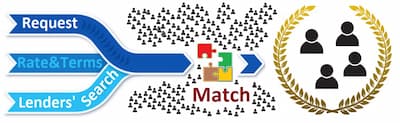
The objective of Lendersa® is to quickly and smoothly provide you with the best USDA or FHA loan available. Choose from one of three entry points that streamline connecting with lenders and exploring USDA loan offerings.
A USDA home loan, also referred to as a USDA rural development loan or USDA mortgage, is backed by the U.S. Department of Agriculture and specifically available for rural areas. Distinct from FHA loans, requiring a minimum down payment of 3.5%, a USDA mortgage requires no down payment at all.
The mission of CACL Federal Credit Union is to provide and promote the use of a variety of financial services which feature particular benefits and advantages over those generally available from other banking sources, with specific intent of helping members gain some particular measure of personal financial success.
First Columbia Bank & Trust Co. has been Columbia County’s community bank for nearly 120 years. With more than $709.5 million in assets as of December 31, 2017, First Columbia offers a full complement of banking and financial services to individuals and businesses throughout Columbia and Montour Counties and the surrounding area.
1st Federal Credit Union is a full-service financial institution who puts the financial goals of our members at the heart of everything we do. Whether in one of our twelve branches located in Bloomsburg, Danville, Elysburg, Lewisburg, Loyalsock, Mifflinburg, Montandon, Shamokin Dam, Sunbury and Wilkes-Barre, or out-and-about in the community.
MC Federal Credit Union has remained committed to our members and the community. Unlike banks, MC Federal is owned by members and run by members. When we make money, it does not go to shareholders, it goes directly back to our members. As a result, MC Federal has industry leading dividends on deposit accounts. Our business plan is simple: Unbreakab
Central Susquehanna Community Federal Credit Union
530 E Market Street, Danville, PA, 17821
Lends in Pennsylvania
CSC FCU opened in the TRW building in Danville as the TRW Federal Credit Union. When TRW closed its manufacturing plant, we moved our office across the street and changed our membership charter from segment-based to community-based. Continuing to provide great service to our members has always been important to us.
The Gratz Bank! With the commitment to carry forward unparalleled client service, The Gratz Bank is honored to positively impact lives. We assure you that our mission to execute a significant client experience and competitive product offering will continue to grow as our business expands.
Central Keystone Federal Credit Union has been open since 1954. The credit union has assets totaling $53.45 Million and provides banking services to more than 3, 000 members.
The credit union is a member-owned financial cooperative providing financial banking services to multiple member groups.
First Keystone Community Bank, a subsidiary of First Keystone Corporation (Stock Symbol: FKYS.ob), has been owned and operated by local men and women since 1864. First Keystone Community Bank has grown from one 18'x 25' building in Berwick to eighteen full-service offices throughout Columbia, Luzerne, Monroe and Montour Counties.
The Northumberland National Bank opened for business in 1903, in a storefront building on the corner of Queen and Water Streets. State senator and Witmer Steele Lumber Company owner Charles Steele saw the need for an independent, locally-owned community bank in his hometown, and his idea was immediately popular